
Health
Eye Conditions
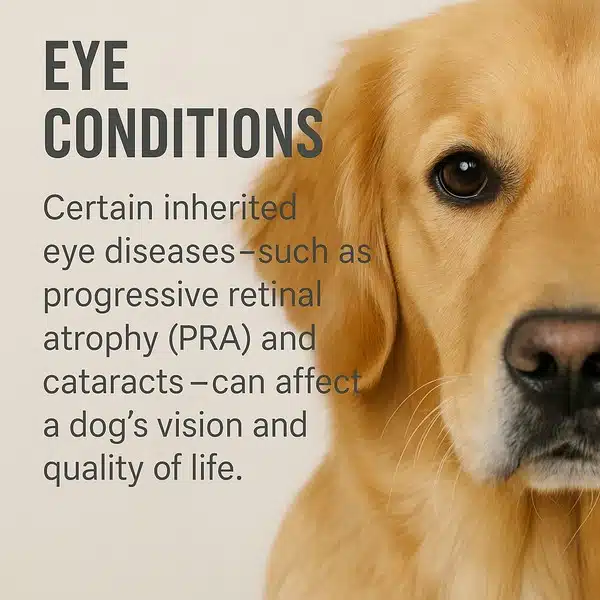
Inherited eye conditions like progressive retinal atrophy (PRA) and cataracts can threaten a dog’s sight and overall well-being. Through CAER (Companion Animal Eye Registry) screenings, Dr. Bromberg evaluates breeding and working dogs for these issues and issues certification under OFA/ACVO guidelines. Although CAER exams are not designed to diagnose or treat medical eye problems, they serve as a valuable tool for spotting hereditary concerns early and supporting responsible canine care.
Non-Retinal Diseases
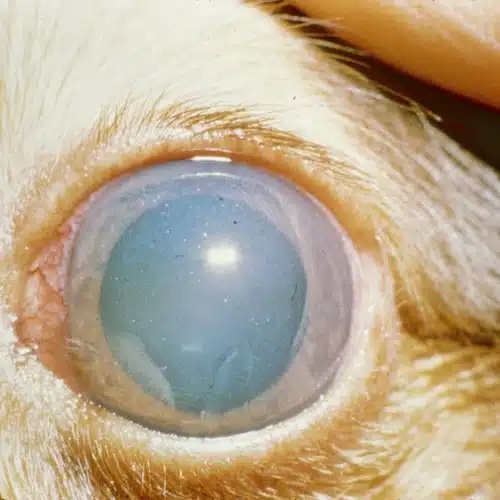
Glaucoma
Glaucoma in dogs is a serious, potentially painful condition characterized by dangerously high pressure inside the eye, known as intraocular pressure (IOP). This elevated pressure damages the optic nerve, leading to rapid vision loss and potential blindness if not treated urgently. For this reason, any sudden cloudiness, redness, or signs of discomfort in your dog’s eye should be treated as a medical emergency requiring immediate veterinary attention.
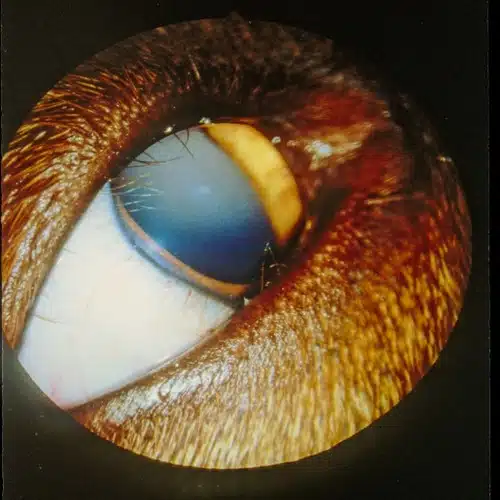
Distichiasis
Distichiasis is a common eye condition, primarily in dogs, where hairs arise from the lid margin pointing toward the cornea causing discomfort. If they are stiff or coarse, they continually irritate and abrade the cornea, often leading to painful corneal ulcers and chronic inflammation.
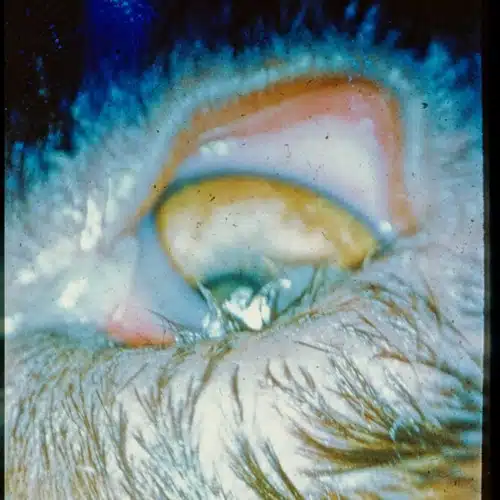
Entropion
Entropion is a common and painful eye condition, particularly in dogs, where a section of the eyelid rolls inward toward the eye. This inward rolling causes the eyelashes and hair on the eyelid to constantly rub against the cornea, leading to irritation, pain, and potentially severe damage like corneal ulcers or blindness.
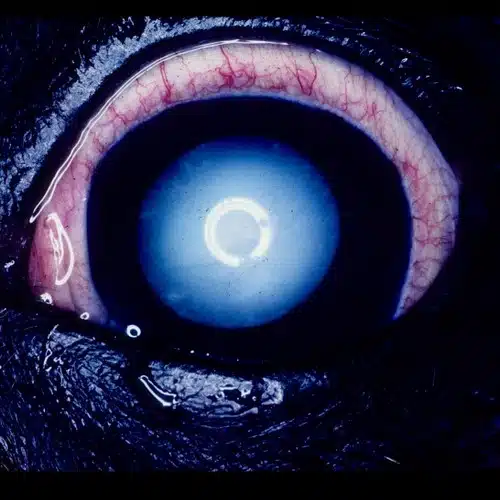
Cataracts
An opacity or cloudiness in the lens of the eye that blocks light and can impair vision. Some forms are inherited, while others may be related to age or disease.
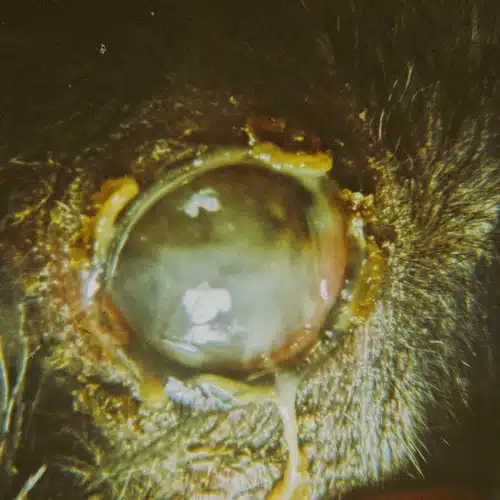
Keratoconjunctivitis Sicca
Keratoconjunctivitis Sicca (KCS), or “dry eye,” in pets is a painful condition where tear glands don’t produce enough lubrication. This causes chronic eye inflammation, noticeable as thick, sticky discharge, redness, and squinting. Without lifelong treatment, KCS leads to severe scarring and potential blindness.
Normal Healthy Eye
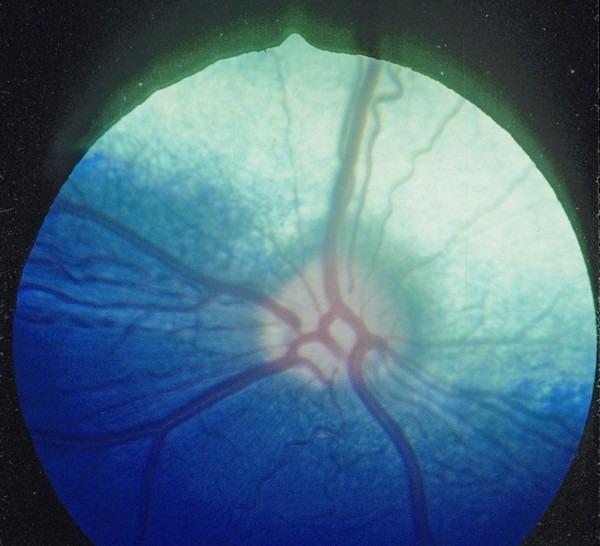
Normal Canine Retina
A normal canine retina appears clear and well-organized when examined. The optic disc is typically pale to pink and has distinct borders. The retinal blood vessels are evenly distributed and of normal thickness, extending smoothly from the optic disc across the retina. The tapetum, a reflective layer in the upper part of the retina, has a bright green, yellow, or blue sheen depending on the dog’s coat and breed, while the non-tapetal area below it appears darker and non-reflective. The overall appearance should be uniform, with no signs of swelling, discoloration, or abnormal reflections.
Retinal Diseases
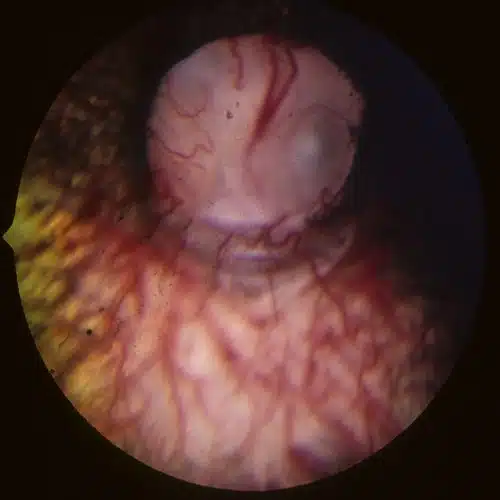
Collie Eye Anomaly
Collie Eye Anomaly is a congenital eye defect that is an inherited syndrome affecting the inner structures of the eye, particularly in Collie-related breeds. Abnormalities can range from choroidal hypoplasia to optic disc colobomas and retinal detachment.
Progressive Retinal Atrophy
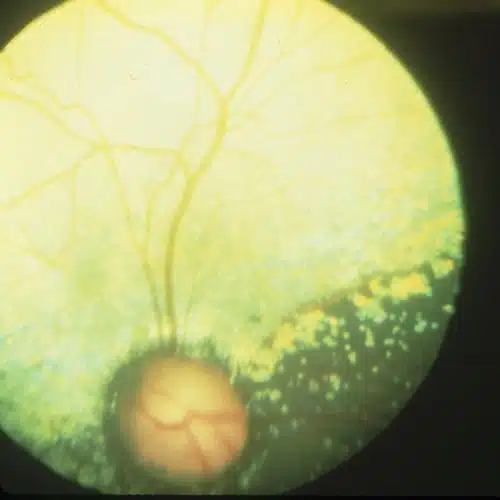
Progressive Retinal Atrophy (PRA) is a group of inherited eye diseases in dogs that cause the gradual degeneration of the retina’s photoreceptor cells (rods and cones). The disease is characterized by a slow, non-painful loss of vision, typically starting with night blindness (loss of rod function), which then progresses over months to years to complete blindness as the cones fail.
Retinal Dysplasia
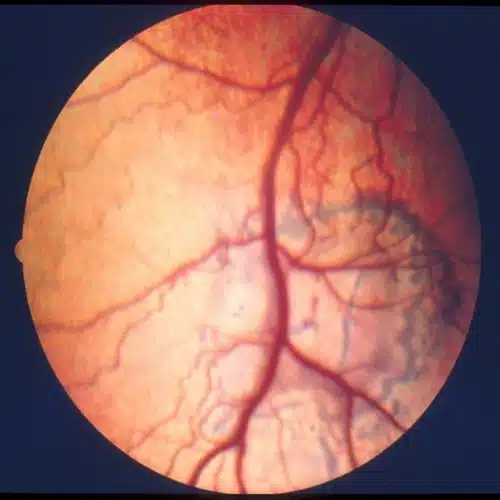
Retinal Dysplasia (RD) is a congenital (present at birth) eye condition in dogs that involves the abnormal development or malformation of the retina—the light-sensitive tissue at the back of the eye
CAER exams are an important step in protecting the future of canine eye health. By identifying inherited conditions early, breeders, service dog organizations, and owners can make informed decisions that support healthier generations of dogs. While these screenings are not a substitute for full medical diagnosis or treatment, they provide valuable certification and peace of mind. For upcoming opportunities to schedule a CAER exam with Dr. Bromberg, please see the Calendar & Schedule page.